Open platform · NIPE-UNICAMP
Biogas and bioproduct potential, municipality by municipality
Estimates of what agricultural, livestock and urban residues can yield as biogas and biomethane, with the method and the sources in plain view. Canonical base: São Paulo state; Minas Gerais under validation.
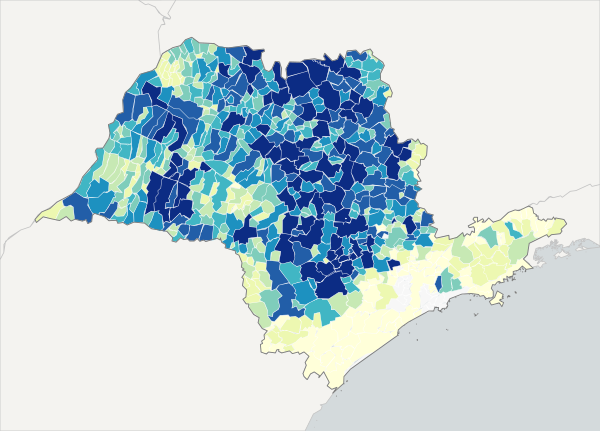
The platform in numbers
- municipalities in the base
- 5,571
- residues in the catalogue
- 25
- sectors
- 4
- scientific references
- 399
Data by sector
What the platform measures
Each residue comes with its methane potential, its chemical characterization and the sources behind them.
Method
How a number is made
Municipal production
It starts from what each municipality grows, raises and discards: harvests, herds, urban waste and sewage sludge, from official sources.
Availability factors
What cannot reach a biogas plant is taken out of what is generated.
Available potential
Methane potential by residue and municipality, by the CP2b method.
News
What changed
· version 3.6.0
Anonymous visit counts
· version 3.5.2
Who CP2b is, on the CP2b website
· version 3.5.1
A basemap without the watermark, and a Sources tab
Open data
Use it, cite it
The data may be used freely, commercial use included, as long as the source is cited.
Code GPL-3.0 · Data CC BY 4.0
How to citeMade by and funded by
- Made by
- NIPE-UNICAMP · CP2B
- Funding
FAPESP 2024/01112-1 · CP2Bsd
FAPESP 2025/08745-2 · national expansion